
Expeditionary Defence & Government Fuel Solutions

Keep fuel available as the mission moves from initial entry to sustained operations in remote, austere, and contested environments. World Fuel configures deployable fuel infrastructure, logistics, and operational support around the mission requirement.
Fuel solutions for remote and challenging environments
When fixed infrastructure is unavailable, insufficient, or too far from the point of need, World Fuel designs expeditionary fuel solutions that move with the operation. Deployable fuel systems can support initial entry, forward refuelling, bulk storage, distribution, sustainment, and redeployment.
We connect deployable fuel equipment and military fuel infrastructure with the fuel supply and controls needed to operate them. That can include acquisition and transportation, along with quality management and operational visibility. Systems can be configured for temporary, semi-permanent, or enduring use, then scaled as mission demand changes. Scope, geography, mobilisation timing, and operating responsibilities are defined for each requirement.
Deployable expeditionary fuel systems and equipment
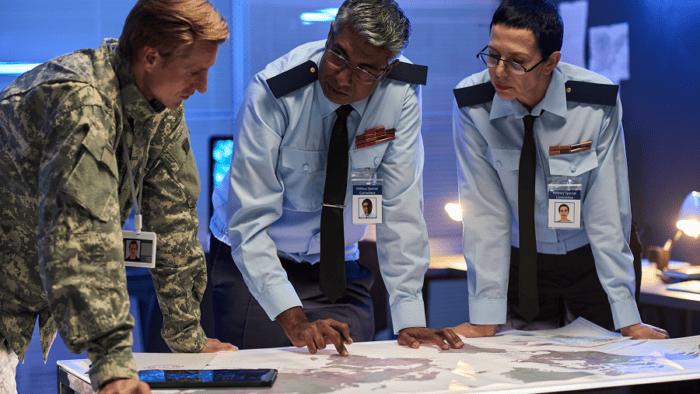
Match each phase of the mission with the system configuration, deployment method, throughput, and controls required to keep fuel moving.
Configure the system around the mission
Build the deployment plan around the operating environment and mission demand. Site characteristics, staffing, logistics packaging, and recovery requirements shape the configuration. Military fuel support can include synthetic-environment site surveys and bill-of-materials development before deployment. Once operating, quantity monitoring, digital metering, batch traceability, and fuel accounting help maintain control as the system is reconfigured.
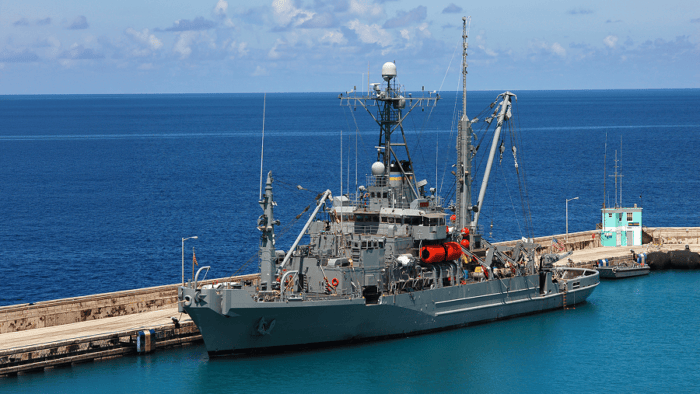
Receive, store, and distribute marine fuel from the point of entry
Establish bulk fuel access where maritime supply meets the shore. The Beach Storage System supports amphibious, littoral, and maritime logistics operations with modular bladder systems ranging from 20,000 to 480,000 liters, a 1,500-meter secure marine fuel transfer pipeline, and pumping capacity up to 2,000 liters per minute.
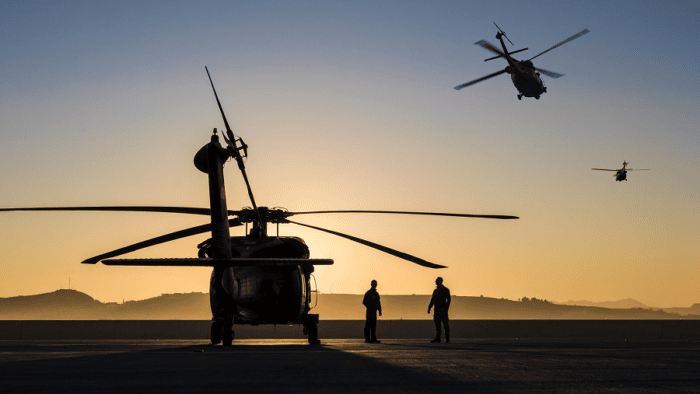
Support distributed aviation operations
Position aviation fuel closer to distributed operations when site infrastructure is limited. Refuelling Point Aviation, also known as a Forward Arming and Refuelling Point, supports rotary-wing, fixed-wing, and ground-force requirements. A four-point configuration can be established in 45 minutes and provides pumping capacity of 400 liters per minute at each dispensing point.
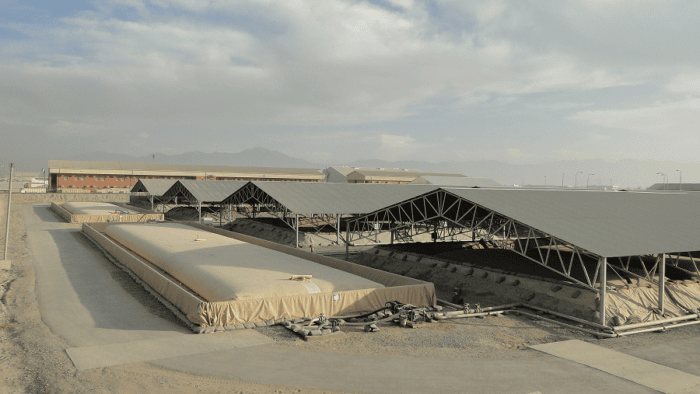
Expand from tactical sites to theater logistics hubs
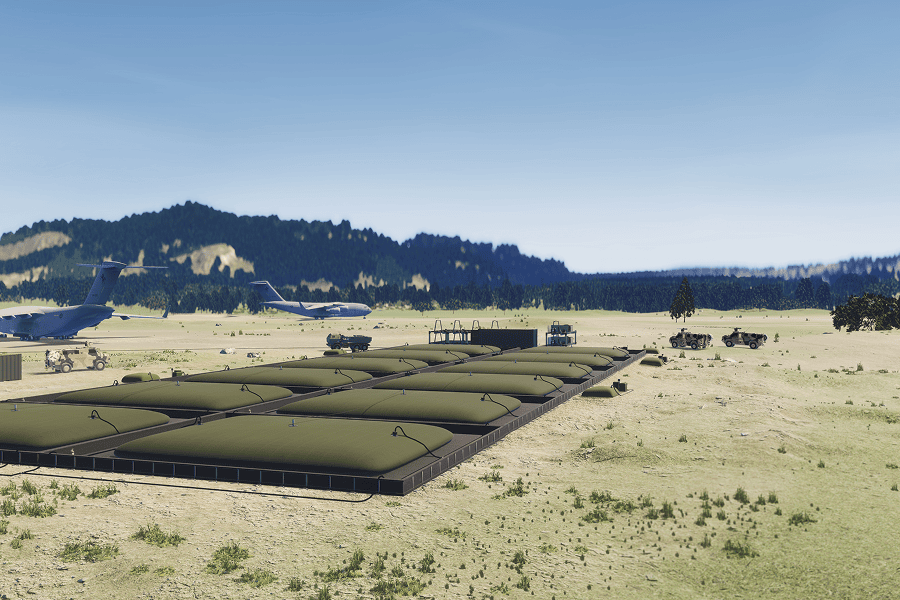
Expand fuel storage and distribution as the operation grows from a tactical site to a theater logistics hub. Bulk Fuel Installations support temporary, semi-permanent, or enduring use. One configuration uses six 80,000-liter bladders for 480,000 liters of storage, supports dispensing to four platforms, and provides pumping capacity from 120 to 2,000 liters per minute.
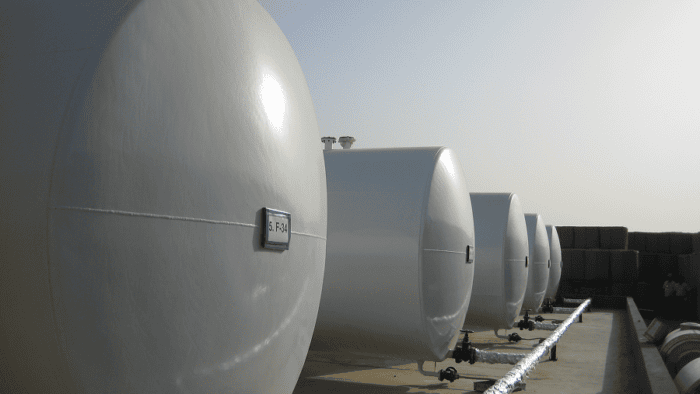
Support force reception and onward movement
Sustain force reception and onward movement through a critical air logistics node. An Aerial Port of Debarkation Bulk Fuel Installation connects high-capacity aviation fuel storage and distribution with tactical and strategic airlift operations. The illustrated configuration provides pumping capacity of 2,000 liters per minute with internal redundancy, high-pressure underwing refuelling, fuel-quantity monitoring, and continuous day and night operation.
Supporting mission readiness with expeditionary fuel solutions
Configure the system around the mission
so deployable infrastructure fits the location and operating duration.
Scale support as the operation develops
from forward refuelling points to theater logistics hubs.
Keep expeditionary fuel moving across the supply chain
by linking military fuel supply with the storage and distribution network.
Maintain control as configurations change
with quality management, quantity monitoring, traceability, and accounting.
Plan for the full deployment lifecycle
from sustainment through recovery and redeployment.
Support combined operations
through alignment with Joint, NATO, and coalition requirements.
Scalable mission support
From initial entry to an operational air bridge
Build the expeditionary fuel network in phases as the operation develops.
The notional Task Force Xray scenario demonstrates how separate deployable systems can form a wider logistics network. At D+1, beach storage and forward aviation refuelling points support initial entry. At D+3, inland distribution connects the beachhead to a forward Bulk Fuel Installation. At D+7, a larger installation at an Aerial Port of Debarkation supports sustained air-bridge operations.
The scenario illustrates one possible employment model, not a guaranteed deployment timeline. Distances, throughput, storage, equipment, and establishment times must be designed against the actual mission.
Related government and defence fuel services
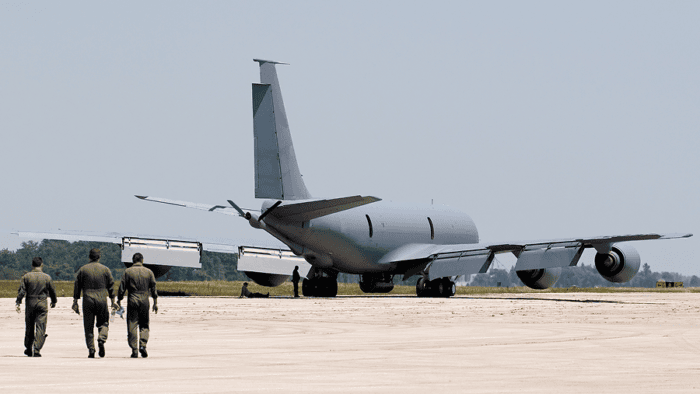
Match the expeditionary requirement with the adjacent fuel service needed to manage product specifications, sustain a remote site, or prepare for disruption.
Military Fuel
Keep aviation and ground requirements aligned with the required fuel specifications, quality controls, logistics, and fuel-management processes.
Emergency Fuel Management
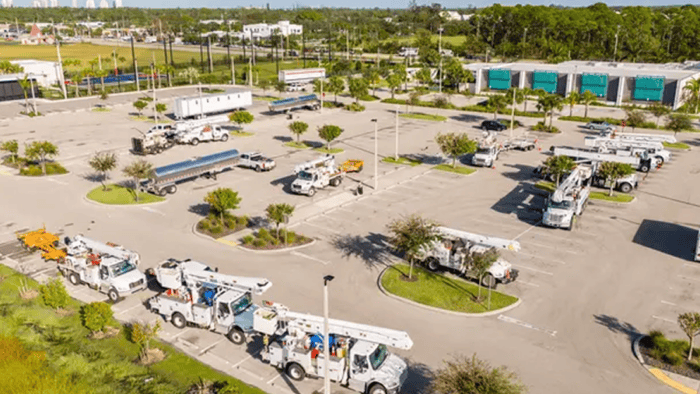
Prepare for fuel disruption before it affects critical operations through vulnerability assessments and contingency planning, supported by emergency supply, mobile fuelling, and operational coordination when required.

Example deployment configurations
45 minutes
RPA/FARP establishment
Four-point expeditionary refueling configuration.
24-48 hours
Bulk Fuel Installation establishment
Example timeframe, dependent on the mission profile and system configuration.
2,000 LPM
Example high-throughput pumping capacity
Specified for selected Beach Storage, Bulk Fuel Installation, and APOD configurations.
Frequently Asked Questions
Key considerations when evaluating deployable fuel infrastructure, mobilisation, scalability, and ongoing sustainment.
Expeditionary fuel solutions combine deployable fuel systems with storage, distribution, and operational support for remote fuel operations. They can support defence and government requirements in remote, austere, or rapidly changing environments. Each configuration is defined by the mission profile, location, expected demand, transport constraints, available infrastructure, and sustainment requirement.
Begin with the mission profile, operating locations, required fuel specifications, expected demand, and deployment timing. Available infrastructure and transport constraints determine how fuel can reach and move through the site. Storage, distribution, staffing, interoperability, and control requirements then shape the system configuration.
Mobilization timing depends on the mission profile, system size, transportation plan, site preparation, approvals, and available personnel. A four-point RPA/FARP configuration can be established in 45 minutes. A Bulk Fuel Installation may require 24-48 hours, depending on the mission profile. These are configuration-specific examples, not universal response times.
Yes. The fuel network can develop with the operation, beginning with forward aviation refuelling points or beach storage and expanding through Bulk Fuel Installations and APOD fuel hubs. Storage volume and throughput can change by phase, along with the required dispensing points, staffing, and transportation interfaces.
The fuel systems are designed for remote, austere, and demanding conditions. Each deployment requires an assessment of site access and environmental conditions, along with survivability, security, and force-protection responsibilities. The fuel system does not replace the customer’s required security or force-protection measures.
Depending on the requirement and location, World Fuel can connect the expeditionary system with fuel acquisition and transportation. Support can continue through storage and distribution, with quality management, quantity monitoring, fuel accounting, and ongoing operational support defined for the requirement. Responsibilities, availability, commercial terms, and local execution are confirmed during solution design.
Why World Fuel
Proven expeditionary fuel experience
World Fuel brings expeditionary infrastructure and deployment capability together with sourcing, defence fuel logistics, quality, and operational experience. Our military fuel support experience includes U.S. government, NATO member, coalition, humanitarian, and rapid-deployment requirements, along with experience supporting the Australian Defence Force Expeditionary Fuel System program.
That experience is supported by an enterprise presence across more than 200 countries and territories, providing access to supply relationships and local market knowledge. Each expeditionary requirement is still validated against the operating location, security environment, product needs, and logistics plan.
The result is an expeditionary fuel solution designed for the actual mission, rather than a standard equipment package applied across different operating environments.
200 +
Countries and territories within World Fuel's enterprise reach
Expeditionary fuel insights
Explore approved capability information and operational perspectives for defense fuel logistics, government and military fuel, and expeditionary requirements.
News | 28 March 2024
Providing Sustainable Aviation Fuel to the United Kingdom Ministry of DefenceSpeak to a Government Fuel Solutions Specialist
When the mission depends on fuel infrastructure that can deploy, scale, and move with the operation, bring the requirement to our Government Solutions team. We will assess the mission profile, operating environment, and sustainment needs with you.
Learn more about our services
Explore related products, solutions, and services to help meet your business needs.