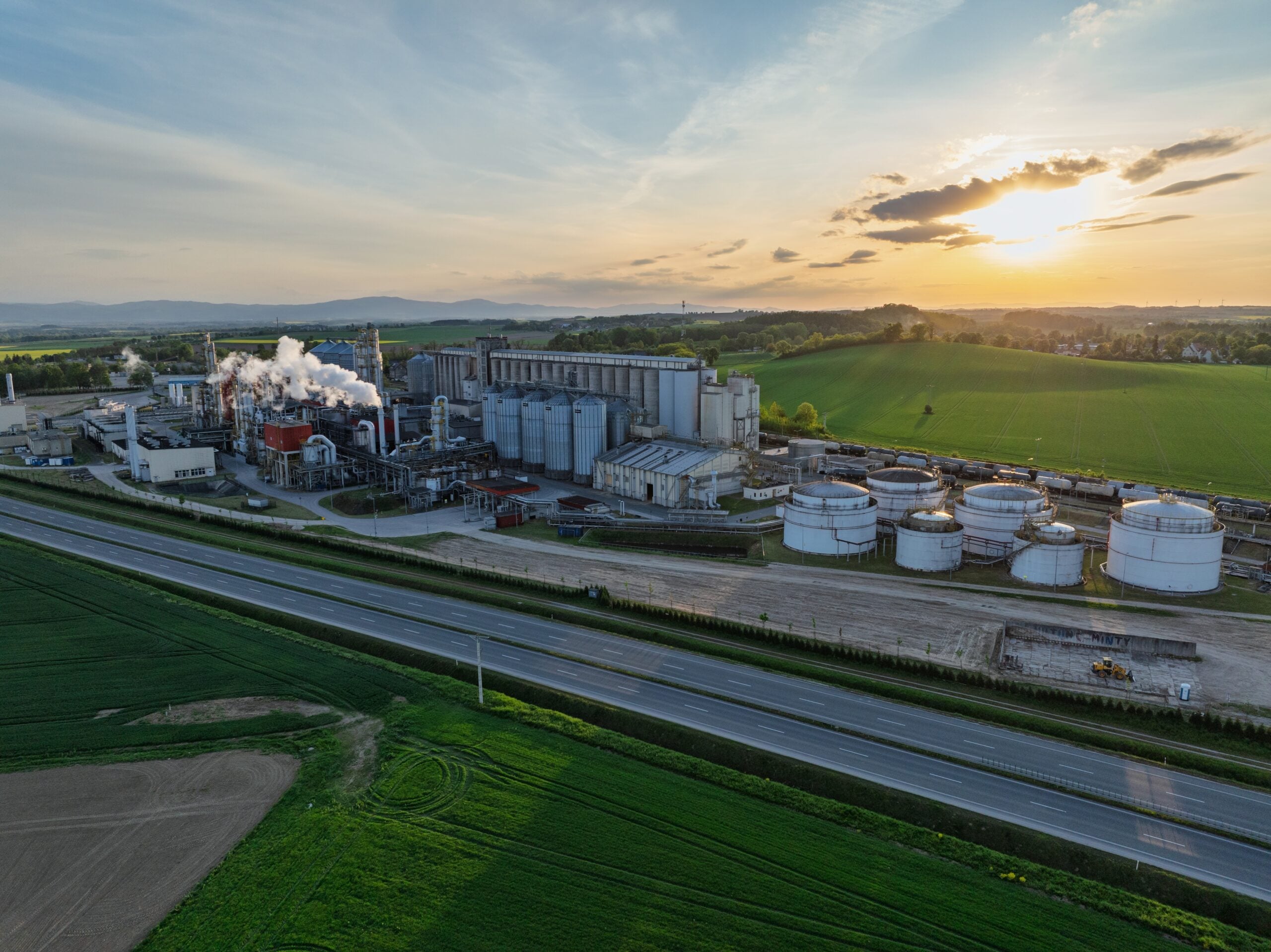
Managing natural gas risk in US ethanol production
For ethanol producers, energy purchasing decisions reach well beyond the utility bill. Natural gas supports production, influences operating margins, and contributes to the carbon intensity of the finished fuel. How a plant buys and manages that energy deserves the same attention producers give to corn.
Yet evaluating natural gas for ethanol production involves more than comparing commodity prices. Regional market conditions, transportation arrangements, contract terms, and daily consumption all shape what a plant ultimately pays—and how much uncertainty it carries. This article looks at how U.S. ethanol producers can consider energy cost, volatility, and risk in a shifting environment, and what to look for in an energy partner.
Why energy is now a core margin issue for ethanol producers
Corn dominates ethanol production costs, but energy is another major operating expense. Natural gas is a major operating expense after corn, although its share varies with commodity prices, plant efficiency, and accounting assumptions.
For a plant operating around the clock, even a modest change in delivered gas cost can have a meaningful budgetary impact. Consider a hypothetical facility consuming 10,000 MMBtu per day: a $0.50-per-MMBtu increase adds $5,000 in daily cost, or $150,000 over 30 days, assuming unchanged consumption.
As a result, successful producers increasingly view natural gas procurement as a strategic function rather than a routine purchasing activity. The objective is to create an energy program that supports operational continuity, improves cost visibility, and helps manage exposure to market volatility.
The hidden complexity behind delivered natural gas cost

A benchmark price provides a reference point. It does not describe the full cost of getting natural gas to an ethanol plant.
Depending on the service arrangement, delivered cost may include:
- Commodity cost: The underlying price of the natural gas purchased.
- Regional basis: The price difference between a benchmark and the relevant regional delivery point.
- Transportation and distribution: Pipeline charges and applicable LDC tariffs.
- Additional charges: Capacity reservation, storage, fuel retention, balancing, and other contract or tariff costs.
Two ethanol plants purchasing natural gas against the same benchmark price can experience significantly different delivered costs depending on geography, pipeline access, and utility structures. This is particularly important throughout the Corn Belt, where regional market dynamics can vary considerably from state to state.
For producers operating multiple facilities, the complexity grows even further. Individual contracts, varying utility territories, different transportation arrangements, and inconsistent reporting can make it difficult to evaluate total energy performance across a portfolio.
Key energy risks for ethanol plants
Price volatility
Natural gas prices can move rapidly due to weather patterns, storage levels, production trends, LNG export demand, and broader market conditions. Winter often presents particular challenges, as increased heating demand can coincide with periods when ethanol plants continue operating at high utilization rates.
Without a clear risk-management strategy, price spikes can create budget uncertainty and compress plant margins at critical times.
Basis exposure
Fixing the benchmark component does not necessarily fix regional basis. A plant may still face changing local costs unless its purchasing arrangement addresses that exposure.
Pipeline and infrastructure constraints
Continuous-run ethanol operations depend on a consistent energy supply. While physical delivery ultimately depends on pipelines, LDCs, infrastructure availability, weather, and market conditions beyond any supplier’s control, procurement decisions still play an important role in managing operational risk.
Transportation arrangements, capacity planning, balancing requirements, nominations, and scheduling practices can all influence how effectively a plant navigates periods of market stress or infrastructure congestion.
Contract rigidity
Not every procurement structure is designed for the realities of ethanol production.
Contracts that lack flexibility can create challenges when run rates change, production schedules shift, or market conditions evolve. A structure that appears attractive at signing may become restrictive if it cannot adapt to operational requirements or market opportunities and challenges.
Operational blind spots
Fragmented contracts, inconsistent forecasts, and unresolved billing discrepancies can obscure costs. For owners with multiple plants, consolidated reporting helps reveal differences in consumption, contract exposure, and invoice performance.
A documented natural gas risk management approach should identify these exposures, assign responsibility, and establish when purchasing decisions require review.
Questions to ask before signing a supply contract
Choosing a natural gas supplier involves much more than comparing rates. Ethanol producers should evaluate whether a supplier understands how to communicate the realities of high-volume, continuous-run operations and can support broader commercial, operational, and sustainability objectives.
How do you structure pricing for high-volume, continuous-run ethanol operations?
Ethanol plants have unique energy profiles. Their steady, around-the-clock demand can often support a range of procurement structures, including fixed-price, index-based, hybrid, and multi-year agreements. Understanding the benefits and tradeoffs of each approach can help align procurement with budget objectives and market conditions.
How do you help manage price volatility and protect margin during winter peaks?
Natural gas markets can be particularly volatile during periods of high seasonal demand. Ask potential suppliers how they support customers with market intelligence, structured procurement approaches, and risk-management strategies designed to help mitigate exposure to significant price swings.
What regional and basis factors affect our delivered cost based on our location and LDC?
The commodity price is only one component of total cost. Basis differentials, pipeline access, transportation charges, and local utility tariffs can vary significantly by location. A supplier should be able to explain how regional market dynamics influence your delivered natural gas costs.
Can you support nominations, scheduling, balancing, and pipeline-capacity planning?
For continuous-run facilities, operational support matters. Suppliers should explain how they support nominations, balancing, scheduling, and capacity planning, while making clear that physical delivery ultimately depends on pipelines, LDCs, and infrastructure conditions outside their direct control.
How do you tailor procurement strategy to our risk tolerance and run rate?
No two ethanol plants have identical objectives. A supplier should be able to show how procurement strategies align with production volumes, operational requirements, and risk-management goals.
Can you support our carbon-intensity and low-carbon fuel goals?
As carbon intensity becomes an increasingly important competitive factor, energy procurement decisions may support broader sustainability initiatives. Suppliers should be prepared to discuss options such as renewable energy certificates, renewable natural gas, energy optimization strategies, and other approaches that may contribute to low-carbon fuel objectives.
What happens if actual usage differs from forecast?
Forecasts are rarely perfect. Understanding how volume deviations are managed can help avoid unexpected costs or operational complications. Ask suppliers how they handle situations where actual consumption differs from projected usage and what flexibility exists within the contract structure.
Where energy strategy meets carbon intensity
Energy decisions also influence ethanol’s carbon intensity (CI), linking procurement to sustainability planning and potential low-carbon fuel value.
Several approaches merit evaluation:
- Energy efficiency: Reducing thermal demand can lower fuel consumption per gallon produced.
- Renewable natural gas (RNG): Replacing some conventional gas with qualifying RNG may reduce lifecycle emissions, depending on feedstock, sourcing arrangements, and the applicable accounting methodology.
- Combined heat and power (CHP): Producing electricity and useful heat together can improve overall energy efficiency.
- Carbon capture and storage (CCS): Capturing and permanently storing process CO₂ can help reduce lifecycle emissions while introducing additional infrastructure and energy considerations.
Importantly, carbon-intensity strategy should not be treated separately from procurement strategy. The most effective approaches consider cost, operational requirements, risk management, and sustainability objectives together. Never before has the intersection between supply and demand fundamentals been greater.
What good looks like in an energy partner
A capable energy partner starts by understanding how the plant operates and has considerable experience with the challenges faced by the ethanol production industry. That includes expected run rates, maintenance schedules, budget requirements, existing contracts, and planned capital projects.
The resulting strategy should make decisions easier to evaluate. Operations needs clarity on daily responsibilities. Finance needs visibility into committed and variable costs. Procurement needs comparable pricing and contract terms. Sustainability needs energy assumptions that align with CI planning.
Look for transparent cost breakdowns, regional market insight, a documented purchasing approach, and ongoing reviews. Effective biofuel energy management also connects contracts with consumption data and invoice checks, helping teams identify issues before they become recurring costs. Combining and examining supply, pipeline, and distribution invoices in one place is a must.
Clear boundaries matter, too. A supplier should explain its responsibilities and the infrastructure or market conditions beyond its control.
How World Fuel supports ethanol producers
World Fuel works with ethanol producers to help them navigate the complexities of natural gas procurement and energy management. Rather than focusing solely on commodity pricing, our approach emphasizes a broader view of delivered cost, risk exposure, and operational requirements.
Our support may include:
- Competitive natural gas procurement strategies
- Market intelligence and analysis
- Risk-management planning
- Fixed, index, hybrid, and structured pricing approaches
- Guidance on regional market factors affecting delivered cost
- Support for nominations, scheduling, balancing, and capacity planning
- Insight into energy decisions that may support carbon-intensity objectives
We understand that physical delivery ultimately depends on infrastructure, utilities, pipelines, weather, and market conditions, all of which are beyond a supplier’s control. The Client Manager serves as the single point of contact to help customers make informed procurement decisions, better understand their risks, and develop strategies suited to their operational and commercial goals.
As energy markets continue to evolve, ethanol producers that take a more comprehensive approach to natural gas procurement will be better positioned to manage costs, navigate volatility, and support long-term business objectives.
Download the guide
For additional purchasing considerations, download the buyer’s guide to natural gas procurement.
Discover more

Article | August 17, 2026
The important role of a Commercial Natural Gas Supplier in the US

Article | July 28, 2026
Planning for peak load: How organizations manage energy procurement
Article | July 15, 2026
Are you overpaying for energy? Nine questions every US energy leader should ask

Article | July 06, 2026
North America Energy Market Outlook: What you need to know

Article | June 29, 2026
Who can help with natural gas procurement in the U.S.?
Article | June 19, 2026
Commercial Natural Gas & Energy Procurement: A guide for municipal authorities
Article | June 17, 2026
Natural gas procurement in a volatile market: Why pricing risk stays elevated
Article | May 29, 2026
A practical guide to navigating the U.S. energy market for small and medium‑sized businesses

Article | May 22, 2026
How the US energy market works: A guide for small and medium-sized businesses

Article | April 29, 2026
A guide to Risk Management in an era of energy cost volatility