Back

Select your location

Global

Local sites

Australia United Kingdom
Back

Gasoline & Diesel Fuel and Services

Back

Natural Gas & Energy Services

Back

Government & Defense Solutions

Book & Claim (SAFc)

User interacting with digital claim form.

Expand access to SAF with Book & Claim (SAFc) Solution

How Book & Claim (SAFc) supports aviation decarbonization

  • Extend SAF participation across more of your operating network when physical supply is unavailable or impractical.
  • Use a consistent Book & Claim (SAFc) process to coordinate eligible activity across locations or business units.
  • Match physical SAF and Book & Claim SAFc to each location based on volume, timing, availability, and reporting requirements.
  • Support internal records and reporting with the applicable chain-of-custody documentation, retirement statement, and certificate.
  • Give procurement and operations teams a shared basis for volume, reporting, and documentation decisions.
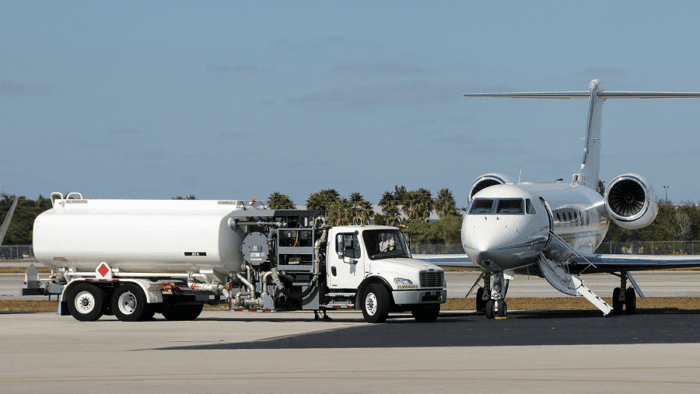
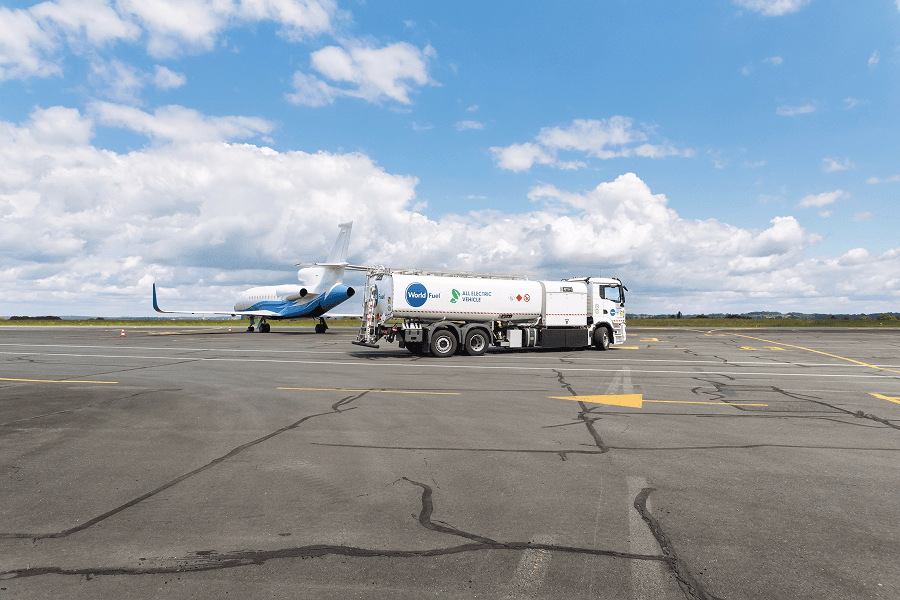
Fuel truck servicing a business jet.

Book & Claim basics

What is Book & Claim (SAFc)?

Purchase process

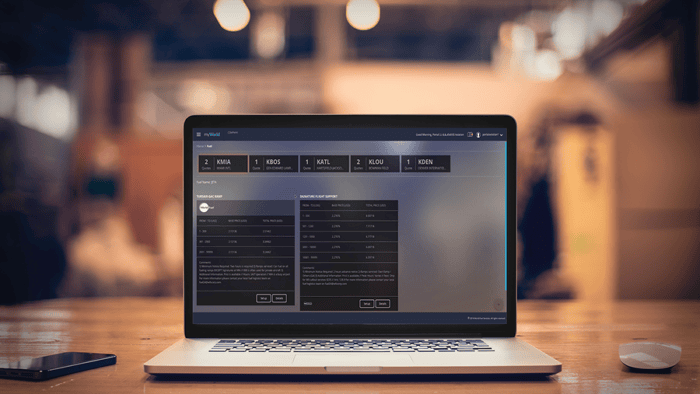
Turn verified aviation data into Book & Claim (SAFc) certificates

hand holding stamp over document
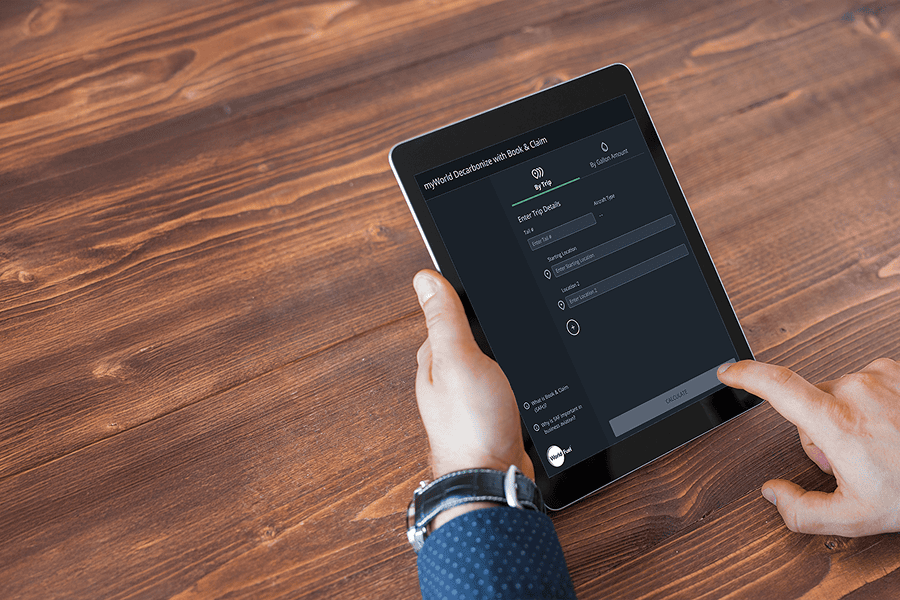
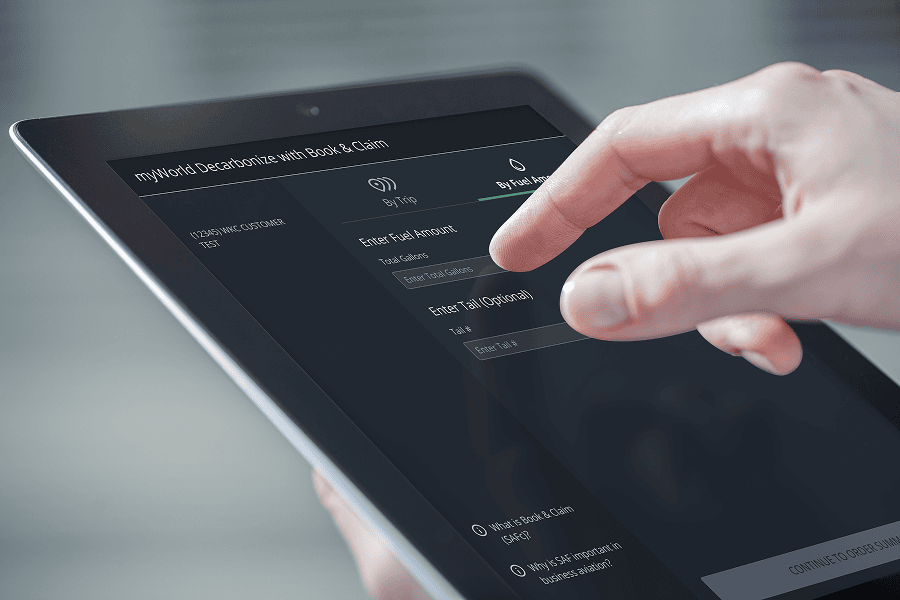
Person using tablet on wooden surface

myWorld Decarbonize

Support renewable fuel participation with greater visibility

Physical SAF vs. Book & Claim (SAFc)
Why World Fuel

Book & Claim (SAFc) FAQs

myWorld Decarbonize allows users to easily calculate their carbon usage based on fuel burn. World Fuel’s proprietary algorithm calculates fuel burn using various attributes, including weather, aircraft specifications, and historical data, to provide one of the most accurate fuel burn calculations available online.

To calculate the emissions associated with every gallon of jet fuel burned, we used the lifecycle analysis CORSIA baseline of 89 gCO2e/MJ or 11.81 kgCO2e/gal. Of this, 15 gCO2e/MJ (1.99 kgCO2e/gal) are associated with upstream production and transportation emissions, sometimes referred to as well-to-tank or Scope 3 emissions of the fuel. 74 gCO2e/MJ (9.82 kgCO2e/gal) are associated with fuel combustion, sometimes referred to as tank-to-wake or Scope 1 emissions of the fuel. Fuel emissions are sometimes represented by the associated Scope 1 emissions only and not the full Life Cycle Analysis (LCA) value. We use the CORSIA-established LCA because it more accurately reflects the total emissions associated with every gallon of fuel consumed and can be consistently applied for all jet fuel, regardless of the source and location of production.

Carbon offsets and carbon insets are two strategies used to mitigate carbon emissions, but they operate differently.

Carbon offsets involve compensating for emissions by funding projects that reduce or remove greenhouse gases elsewhere. Examples include reforestation projects or renewable energy initiatives. Carbon insets, on the other hand, focus on reducing emissions within a company’s own value chain. This means implementing sustainable practices directly related to the company’s operations, such as improving supply chain processes or investing in renewable energy for their facilities

Book and Claim is an example of a carbon inset because it allows companies to reduce emissions within their own value chain by purchasing SAF credits, thereby embedding sustainability directly into their operations.

After your purchase has been processed, World Fuel will produce a retirement statement and certificate. This could take up to 72 hours, not including holidays and weekends. The statement will include flight details as well as details on any associated fuel specs such as carbon intensity, airport of delivery, and raw materials used in production.

How were my emissions savings from the SAF I purchased today calculated?
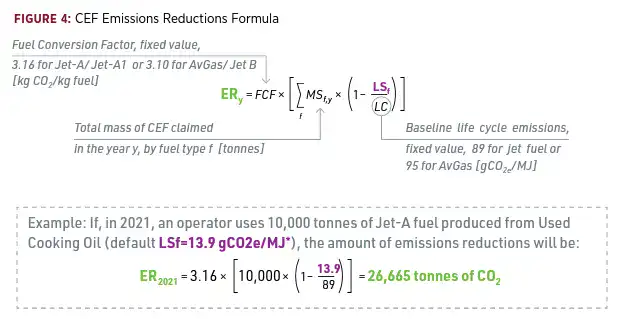
CEF Emissions Reductions Formula

Discuss your Aviation decarbonization strategy

Learn more about our services